

Goddess Saraswati Statues
Saraswati stands as one of the most venerated goddesses in Hindu tradition, embodying the principles of knowledge, wisdom, music, and arts. Her presence in sculpture transcends mere religious representation, serving as a reminder of intellectual pursuit and creative endeavor. Statues of Saraswati have been crafted across the Hindu regions of South and Southeast Asia for centuries, each reflecting the artistic sensibilities and spiritual understanding of its cultural origin.
The goddess appears in ancient Hindu texts as Brahma's creative partner, called upon by scholars, musicians, and artists seeking inspiration and clarity. In Hindu cosmology, Saraswati operates as a complement to other deities: while Lakshmi governs material abundance and Shiva represents cosmic power, Saraswati presides exclusively over intellectual and creative domains. Her iconographic presence in sculptures demonstrates how abstract concepts of wisdom and learning become tangible through artistic form. These statues function as focal points for both devotional practice and aesthetic appreciation, honoring the connection between knowledge and the arts.


Iconographic Elements and Symbolism
Saraswati's sculptural representation follows a rich iconographic tradition refined over millennia. She is typically depicted in a graceful seated position, often upon a lotus flower, symbolizing purity and spiritual awakening. Her composed demeanor reflects the contemplative nature of knowledge itself, while her refined features express both beauty and intellectual depth. This seated posture distinguishes her from standing Buddha and active depictions of warrior deities like Hanuman.
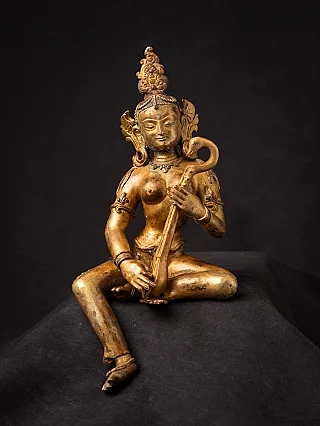
The veena held by Saraswati is not merely a decorative attribute but a profound symbol of the arts and creative expression. This ancient stringed instrument represents the harmony of the universe and the relationship between sound, music, and knowledge. When held by the goddess, it signifies her role as patroness of musicians, poets, and all who engage in creative pursuits. In material form, Saraswati appears in bronze works where artisans capture the delicate hand position holding the veena with remarkable precision.
A book or palm leaf manuscript appears in many Saraswati statues, representing the preservation and transmission of knowledge through written word. This element connects the goddess directly to learning institutions, libraries, and scholarly traditions. The prayer beads (mala) draped across her figure symbolize spiritual discipline and the meditative aspects of knowledge acquisition. These attribute combinations appear consistently across Nepal, India, and Thailand artistic traditions.
The water pot or kamandalu represents the sacred waters of knowledge and purification. White attire and pale coloring symbolize purity and the clarity of true wisdom, distinguishing Saraswati from other goddesses including Parvati and Krishna depictions, and emphasizing her association with unblemished, authentic knowledge. This chromatic preference influences material choices, with stone and marble proving especially popular for portraying Saraswati's luminous qualities.
The Sacred Swan and Divine Attributes
In many Saraswati statues, a white swan or goose (hamsa) appears as a companion, either beneath her or positioned nearby. This bird carries profound spiritual significance in Hindu philosophy and appears similarly in depictions of Lakshmi and other deities. According to traditional teachings, the swan possesses the miraculous ability to separate milk from water, symbolizing the discriminative wisdom to distinguish truth from falsehood, reality from illusion. This discernment mirrors the intellectual function Saraswati embodies as keeper of authentic knowledge.
The hamsa's association with Saraswati reinforces her function as a guide toward true knowledge and authentic understanding. The elegance and grace of the swan further embody the refinement and sophistication inherent in intellectual and artistic pursuits. Together, goddess and swan form a complete symbolic representation of knowledge tempered by discernment and beauty enhanced by wisdom. This pairing appears with particular refinement in Nepalese and Indian sculptures, where the hamsa's graceful posture mirrors the goddess's composed demeanor.
Regional Artistic Traditions
Saraswati sculptures reflect the distinctive artistic vocabularies of their regions of origin, with Nepalese, Indian, Thai, and other Southeast Asian interpretations each contributing unique aesthetic dimensions to her portrayal.
Nepalese bronze sculptures of Saraswati are renowned for meticulous attention to detail and refined proportions. Artists in the Kathmandu Valley and surrounding regions employ traditional metalworking techniques passed down through generations, creating pieces that often feature elaborate jewelry, intricate ornamentation, and frequently gold or copper gilding. The serene expressions characteristic of Nepalese work convey a profound spiritual composure.
Indian artistic traditions encompassing diverse regional schools each interpret Saraswati according to local conventions. South Indian bronze works, for instance, demonstrate particular stylistic signatures distinct from Bengal or North Indian representations. These variations reflect the vast cultural landscape of the Indian subcontinent and the way a shared goddess is understood and portrayed through different artistic lenses.
Thai renditions of Saraswati incorporate elements of Southeast Asian sculptural tradition while maintaining the core iconographic features that identify the goddess. Thai artisans balance the stylistic preferences of their own artistic heritage with reverence for Saraswati's essential symbolic attributes, creating a synthesis of regional and trans-regional aesthetic principles.
Materials and Craftsmanship
Bronze remains the predominant material for fine sculptures, prized for its capacity to capture minute details and its ability to patina beautifully over time. Bronze casting allows artisans to render the intricate features of Saraswati's face, the delicate fingers holding sacred objects, and the flowing folds of fabric with remarkable precision.
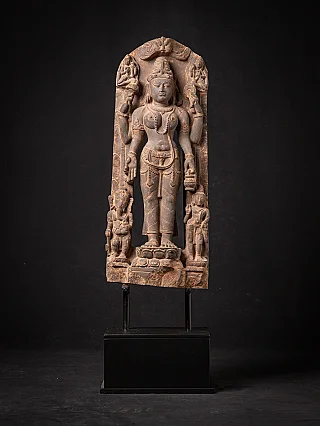
Stone statues, carved from marble, sandstone, or other materials, convey permanence and monumentality. These sculptures are traditionally associated with temple settings and public spaces, where their solidity and weight create a sense of timeless presence. The carving process requires both technical skill and an understanding of the stone's natural qualities.
Wooden Saraswati sculptures demonstrate regional carving traditions and the craftsperson's intimate relationship with the material. Wood's warmth and organic quality create a different aesthetic experience than bronze or stone, often conveying accessibility and intimacy.
Lacquerware versions of Saraswati, particularly from Burmese artistic traditions, showcase the refinement of this complex craft. The layering and decorative techniques associated with lacquerwork create surfaces of extraordinary depth and visual richness, with the goddess represented in brilliant colors and elaborate patterning.
Spiritual Significance and Placement
Saraswati statues serve as focal points for spiritual practice and aesthetic contemplation. In homes and personal altars, a Saraswati sculpture honors the pursuits of learning and creative expression. Students, scholars, musicians, and artists have long positioned Saraswati representations in their study spaces and practice areas, calling upon the goddess for inspiration, clarity, and the removal of intellectual obstacles.
The placement of a Saraswati statue carries intentional meaning. Positioning the figure toward the east or north, where the sun rises or where spiritual energy is traditionally understood to flow, enhances its spiritual function. A clean, respectful environment surrounding the statue reflects the purity Saraswati embodies.
In temple contexts, Saraswati often occupies a significant position within shrines dedicated to various deities. Her presence acknowledges the spiritual dimension of knowledge and artistic excellence, expanding the scope of devotional life beyond physical or material concerns.
Preservation and Care
Bronze Saraswati statues require attentive but straightforward maintenance. Gentle dusting with soft, dry cloths prevents dust accumulation and maintains the surface appearance. Bronze develops a natural patina over time, a process that many collectors value. If oxidation becomes excessive, specialized bronze cleaners may be applied carefully, following proper techniques to avoid damage to any gilding or detailed surfaces.
Stone sculptures benefit from placement in stable temperature environments. Extreme fluctuations in heat and humidity can cause stress to the stone and potentially lead to cracking. Outdoor placement requires consideration of weather patterns and seasonal changes in the climate.
Wooden statues necessitate protection from excessive moisture and fluctuating humidity levels. Regular, light dusting maintains the surface without requiring water or chemical treatments that might damage the wood or any applied finishes.
All materials benefit from protection from direct sunlight, which can fade colors, affect gilding, and over extended periods cause surface damage. A sheltered, interior location generally provides optimal conditions for long-term preservation.
Related Collections and Traditions
Saraswati sculptures connect to broader traditions of Hindu deity representation. Statues of Lakshmi, goddess of abundance, often appear alongside Saraswati in temples and homes, representing the complementary principles of material prosperity and intellectual wealth. Parvati, consort of Shiva, offers another significant feminine divine presence within Hindu tradition.
Visitors interested in regional Hindu artistry may explore diverse styles represented in deity sculptures. Statues from Nepal showcase the Kathmandu Valley's renowned metalworking heritage, while Indian works demonstrate the subcontinent's vast artistic diversity.
Material-specific explorations provide another avenue for understanding Saraswati representations. Bronze versions emphasize technical mastery and detail, stone sculptures convey monumental presence, and wooden pieces showcase carving traditions. Lacquerware Saraswati figures represent the sophisticated decorative arts of Myanmar and the broader Southeast Asian region.