

Lakshmi Statues
Lakshmi holds a distinctive place in Hindu sculptural tradition, embodying prosperity, wealth, abundance, and divine grace. Unlike Saraswati who represents knowledge or Parvati who embodies devotion and power, Lakshmi's iconography centers on material abundance and blessing. She is the eternal consort of Vishnu, and her presence in sculpture spans Nepal, India, and Southeast Asia with remarkable regional variation. For collectors, Lakshmi statues offer exploration of prosperity consciousness rendered through centuries of artisanal tradition.
The mythology identifies Lakshmi as the source of all material and spiritual wealth, generating her distinctive visual language. In sculpture, she appears seated on lotus flowers, often accompanied by elephants that symbolize strength and abundance. Her hand gestures convey blessing and the bestowal of prosperity. Collectors prize Lakshmi statues for their ability to convey wealth consciousness and material grace within a single sculptural form, making her representations highly sought across multiple collector segments.
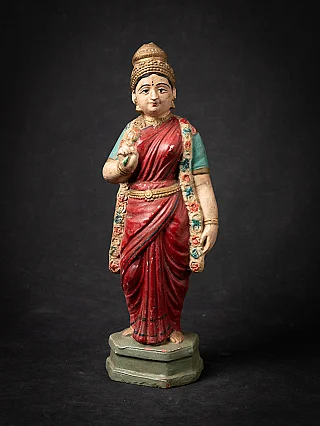
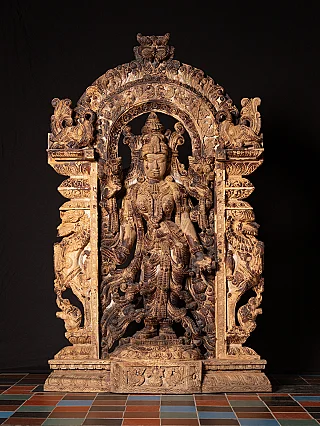
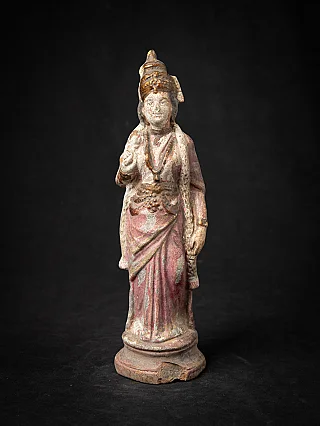

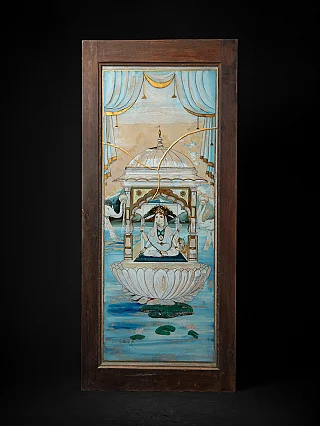
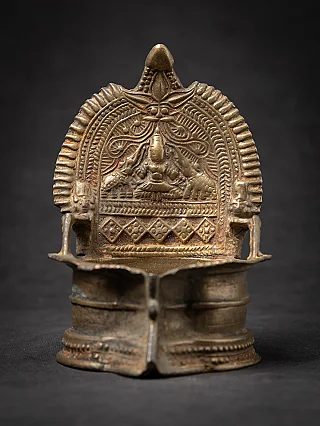
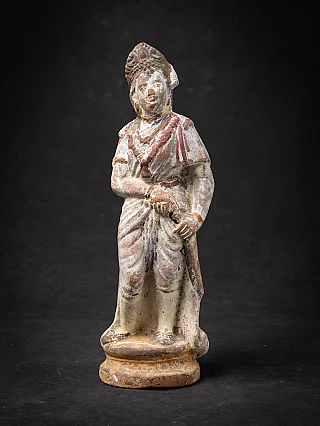

Iconographic Attributes and Symbolic Language
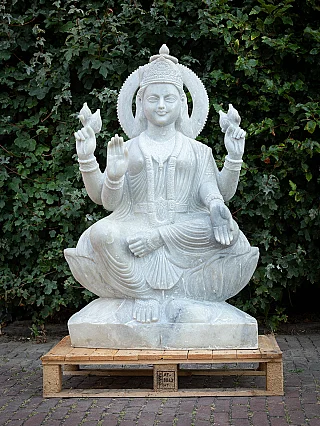
Lakshmi appears in sculpture with a distinctive set of attributes that immediately distinguish her from other goddesses. The lotus flower is paramount—she is typically seated on a lotus, holding lotus flowers, or surrounded by lotus blooms. This floral emphasis signals spiritual purity and material flourishing simultaneously. Golden coloring appears frequently in Lakshmi representations, symbolizing wealth and divine radiance. Her facial expression conveys serene benevolence, suggesting both material generosity and spiritual grace.
Hand gestures in Lakshmi statues communicate specific meanings. The Varada mudra (open palm facing outward) symbolizes blessing and the granting of wishes. Coins and gold vessels frequently appear in her hands or at her feet, representing the wealth she bestows. Her seated posture—more prominent in Lakshmi than in Saraswati or Parvati—conveys stability, grounding, and the permanence of prosperity. For collectors, these iconographic elements create immediate visual recognition and deeper appreciation of her prosperity-conferring role.
Her clothing and jewelry vary extensively by region. Nepalese bronze Lakshmi pieces frequently feature elaborate ornamentation including detailed crowns, armlets, and elaborate jewelry that showcase fine metalworking. Indian stone sculptures may emphasize flowing drapery and carefully rendered fabric to highlight carving skill. Thai renditions incorporate Southeast Asian aesthetic conventions while maintaining Lakshmi's essential iconographic elements. For collectors, these regional variations provide rich comparative study across artistic traditions.
Regional Artistic Traditions and Craftsmanship
Nepalese Lakshmi sculptures, typically executed in bronze using traditional lost-wax casting, represent the apex of fine detail work. Artisans in the Kathmandu Valley employ techniques passed through family lineages spanning generations. The characteristic refinement of Nepalese Lakshmi pieces lies in the precise rendering of her seated posture, the delicate treatment of lotus flowers, and frequently, selective gold gilding that enhances her divine radiance. Collectors recognize Nepalese pieces immediately by their compositional balance and technical precision.
In India, Lakshmi traditions vary dramatically by region. South Indian bronze work demonstrates distinct stylistic signatures emphasizing curvilinear forms and dynamic seated poses. Central and North Indian stone carving reveals regional aesthetic preferences in drapery rendering and facial expression. The South Indian tradition, in particular, developed sophisticated approaches to rendering Lakshmi's abundant, generative energy through sculptural form. This regional diversity means Indian Lakshmi pieces offer collectors multiple collecting paths based on geographic tradition, material preference, and stylistic affinity.
Thai and broader Southeast Asian Lakshmi representations blend Hindu iconographic requirements with local artistic vocabularies. Thai pieces often showcase the elegant compositional balance characteristic of Southeast Asian sculpture while maintaining Lakshmi's essential symbolic attributes—lotus, coins, blessing gestures. These cross-cultural pieces appeal to collectors interested in Hindu art's geographical reach and cultural adaptation across different civilizations.
Materials, Construction Methods, and Collector Considerations
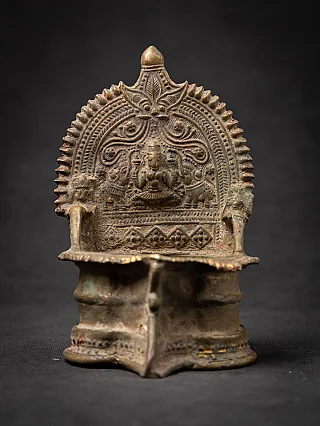
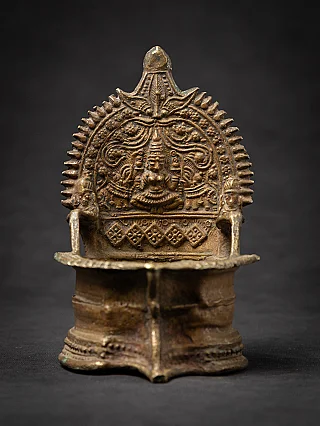
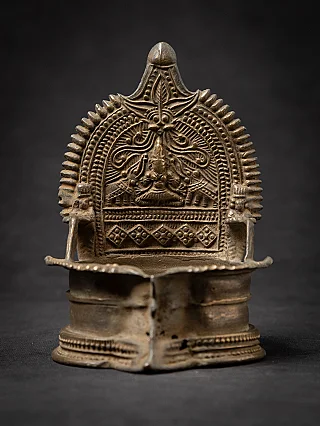
Bronze Lakshmi statues dominate the premium collector market, particularly pieces cast using lost-wax techniques. Bronze's ability to capture minute detail allows artisans to render Lakshmi's serene expression, delicate hand gestures, and elaborate jewelry with extraordinary refinement. Patina development over time adds visual depth and authenticity markers that collectors value. Bronze pieces withstand handling and display changes better than fragile materials, making them preferred for serious collectors.
Stone Lakshmi sculptures, carved from marble, sandstone, or soapstone, convey permanence and monumentality. The stone selection itself communicates about origin and regional tradition. Marble pieces often indicate South Indian or North Indian sourcing. Sandstone suggests Rajasthani or Central Indian provenance. Stone pieces demonstrate the carver's skill through negative space management and the ability to render flowing drapery. Collectors appreciate stone pieces for their visual weight and the way they anchor interior spaces.
Wooden Lakshmi pieces showcase regional carving traditions and the craftsperson's intimate engagement with natural material. Nepalese wooden pieces often feature elaborate ornamentation mimicking jewelry. Indian wooden Lakshmi sculptures display regional conventions in compositional balance and facial expression. Wood pieces develop patina and color changes over decades, creating a visual record of age and use. For collectors, wooden pieces represent engagement with living artisanal traditions and direct support of carving communities.
Lacquerware Lakshmi figures, particularly from Myanmar, showcase a wholly different aesthetic tradition. Lacquer application creates surfaces of remarkable glossiness and color depth. Burmese lacquerware pieces often combine geometric patterning with representational elements, creating visual richness distinct from bronze or stone. These pieces appeal to collectors seeking material and stylistic diversity in their Hindu art acquisitions.
Lakshmi with Attendants: Elephants and Compositional Variants
A distinctive collecting category involves Lakshmi depicted with elephants or elephant attendants. In Hindu symbolism, elephants represent strength, royal power, and prosperity. The imagery of elephants bathing Lakshmi (pouring water or flowers over her) conveys abundance and blessing cascading down to devotees. These multi-figure compositions create dynamic narratives within sculptural form. Collectors prize Lakshmi-with-elephants pieces for their visual richness and the opportunity to study compositional relationships and animal rendering alongside divine representation.
Lakshmi also appears in paired compositions with Vishnu, her eternal consort and preserver god. These paired pieces convey complementary divine principles—Vishnu's protective authority balanced by Lakshmi's generative abundance. In such sculptures, Lakshmi often occupies equal or prominent visual positioning. Collectors prize Lakshmi-Vishnu pairs for their ability to convey theological relationships and divine partnership through sculptural composition. Acquiring matched pairs requires understanding regional conventions about figure positioning and hand gestures.
Authenticity, Provenance, and Collector Authentication
For serious Lakshmi collectors, authenticity determination involves multiple assessment layers. Bronze analysis requires understanding lost-wax casting techniques and recognizing patina development that indicates age. Surface examination reveals hand-finishing marks distinctive to traditional versus factory production. Iconographic precision—verifying that lotus rendering, hand gestures, and seated posture match regional conventions—provides strong authentication indicators. Nepalese Lakshmi pieces typically demonstrate specific proportional conventions distinguishable from Indian regional schools.
Material sourcing knowledge enhances authentication capability. Understanding which materials appear in specific regional traditions helps identify origin claims. Bronze composition analysis, while requiring specialized equipment, can sometimes distinguish regional metallurgical traditions. Stone type identification—through weight, color, surface characteristics, and regional availability—provides geographic origin information. Collectors developing expertise in Lakshmi authentication often specialize in one regional tradition deeply rather than attempting mastery across all sources.
Display, Placement, and Interior Integration
Lakshmi statues integrate differently into interior spaces depending on composition and scale. Standalone Lakshmi figures work as focal points on shelving, pedestals, or display cabinets. Paired Lakshmi-Vishnu pieces create visual anchor points and often benefit from positioning near windows where light can interact with surface finishing. Elephant-attendant compositions require sufficient display space to appreciate the multi-figure relationships and animal detail. Collectors consider sightline angles when positioning pieces, ensuring viewers encounter Lakshmi's serene expression and blessing gestures from natural approach paths.
Scale considerations matter significantly. Large Lakshmi pieces (over 12 inches) function as major spatial elements and can dominate rooms with their presence and blessing energy. Medium pieces (6-12 inches) integrate into curated collections and shelf arrangements. Miniature pieces (under 3 inches) work as personal altar figurines or meditation focus objects. Collectors often develop collecting focus around specific size ranges, creating coherent display narratives. Seated Lakshmi figures benefit from positioning on elevated surfaces that draw the eye upward, creating psychological association with blessing and abundance flowing downward.
Preservation, Maintenance, and Long-Term Care
Bronze Lakshmi pieces require minimal intervention but benefit from understanding patina management. Natural patina development creates surface color variation that many collectors value as authenticity evidence. Dust accumulation should be addressed with soft cloths only. Oxidation buildup that obscures fine details can be gently addressed using specialized bronze cleaning methods. Collectors should avoid aggressive polishing, which erases evidence of age and handling history. Stable temperature and humidity environments prevent structural stress to bronze.
Stone Lakshmi pieces benefit from stable environmental conditions. Extreme temperature fluctuations cause stress that can lead to surface cracking or structural damage. Humidity stability prevents salt efflorescence on stone surfaces. Dust management using only soft cloths preserves carving detail. Stone pieces should never be exposed to harsh chemical cleaners. Collectors housing stone pieces in climate-controlled environments maximize preservation outcomes.
Wooden Lakshmi pieces require protection from humidity extremes and insect damage. Stable relative humidity (ideally 45-55%) prevents wood warping and cracking. Periodic light dusting with soft cloths maintains surface clarity. Wooden pieces should be positioned away from heating vents and direct sunlight, which can cause wood movement and finish degradation. Professional conservation intervention should be sought if wood pieces show signs of woodworm damage or structural stress.
Building a Lakshmi Collection
Collectors develop Lakshmi collections through various strategies. Some focus on prosperity symbolism and belief systems, deepening understanding of how Lakshmi imagery relates to abundance consciousness across cultures and time periods. Others pursue regional tradition collecting, acquiring Lakshmi pieces from Nepal, India, and Thailand to study artistic variation. Still others pursue material-based collecting, acquiring Lakshmi pieces across bronze, stone, wood, and lacquerware. Elephant-attendant and Vishnu-paired compositional variants create additional collecting dimensions.
Serious collectors often establish authentication expertise in their focus area, developing eye for recognizing regional conventions, construction methods, and quality markers. They track provenance when available and understand that attribution history adds value and reliability. Building relationships with responsible dealers who vet sourcing and provide transparent information about piece origin enhances collecting success. Over time, collectors develop sophisticated understanding of market dynamics, historical pricing patterns, and which regional schools and artists command premium value.
Lakshmi's Role in Broader Hindu Deity Collections
Within comprehensive Hindu god and goddess collections, Lakshmi occupies a distinctive position. Unlike Saraswati who typically appears independently or Parvati who frequently appears in relationship to Shiva, Lakshmi appears both independently and paired with Vishnu. Her prosperity symbolism offers collectors thematic consistency across a collection—prosperity and abundance as organizing principles alongside knowledge (Saraswati), power (Parvati), and devotion themes. Collectors building comprehensive deity collections naturally include Lakshmi as essential to representing the full spectrum of Hindu divine principles.
Frequently Asked Questions (FAQs)
Q1: Who is Lakshmi and why do collectors pursue her statues?
A: Lakshmi is the Hindu goddess of wealth, prosperity, abundance, and fortune. She is the eternal consort of Vishnu and represents material and spiritual enrichment. Collectors pursue Lakshmi statues for several reasons: her iconic visual language (lotus flowers, coins, blessing gestures), the prosperity symbolism that appeals to affluent collectors, and the remarkable regional artistic variation across Nepal, India, and Southeast Asia. Unlike other Hindu goddesses, Lakshmi's imagery centers on abundance-conferring power, making her representations distinctly appealing to collectors interested in prosperity consciousness and divine grace.
Q2: What are the main iconographic symbols in Lakshmi statues and what do they mean?
A: The primary symbols in Lakshmi representations include: the lotus flower (spiritual purity and material flourishing—she appears seated on, holding, or surrounded by lotus), coins or gold vessels (representing the wealth she bestows), her hand gestures or mudras (particularly the Varada mudra with open palm, symbolizing blessing and the granting of wishes), gold coloring or gilding (divine radiance and wealth), and her serene facial expression (benevolent generosity). Her seated posture—more prominent in Lakshmi than in other goddesses—conveys stability, grounding, and the permanence of prosperity. Elephants, when depicted with her, symbolize strength and abundance.
Q3: How do Lakshmi representations vary by region (Nepal, India, Thailand)?
A: Nepalese Lakshmi sculptures, typically cast in bronze using lost-wax techniques, emphasize intricate detail work with elaborate jewelry and frequently selective gold gilding. Nepalese artisans prioritize facial refinement and compositional balance. Indian Lakshmi varies significantly: South Indian bronze work features curvaceous forms and dynamic seated poses; Central and North Indian stone carving emphasizes flowing drapery; Eastern Indian (particularly Bengali) traditions highlight her maternal and nurturing aspects. Thai and Southeast Asian versions blend Hindu iconography with local artistic vocabularies, creating elegant compositions that maintain Lakshmi's essential attributes while reflecting regional aesthetic conventions. Collectors value this regional diversity for comparative study and cultural appreciation.
Q4: What materials are Lakshmi statues typically made from and which are preferred by collectors?
A: Lakshmi statues are created in four primary materials. Bronze (cast using lost-wax techniques) dominates the premium collector market due to its ability to capture minute detail, develop authentic patina over time, and withstand handling. Stone (marble, sandstone, soapstone) conveys permanence and monumentality; selection indicates regional origin. Wooden Lakshmi pieces showcase regional carving traditions and develop visual patina records over decades. Lacquerware (particularly from Myanmar) creates glossy, colorful surfaces distinct from other materials. Collectors often specialize in one material or pursue material-based collecting to compare artistic approaches. Bronze is preferred for detail work and authenticity markers; stone for visual weight and regional study; wood for artisanal tradition; lacquerware for aesthetic diversity.
Q5: How can collectors verify the authenticity of a Lakshmi statue?
A: Authentication involves multiple assessment layers. For bronze pieces: understand lost-wax casting techniques, recognize patina development that indicates age, examine hand-finishing marks distinctive to traditional production versus factory methods. For stone: identify stone type through weight, color, and regional availability patterns (marble suggests South/North India; sandstone suggests Rajasthan/Central India). Proportional analysis—examining how artisans balanced compositional elements—reveals training tradition and cultural origin. Iconographic precision is crucial: verify that lotus rendering, hand gesture positioning, and seated posture match regional conventions. Regional conventions vary: Nepalese pieces demonstrate specific proportional conventions distinguishable from Indian schools. Material sourcing knowledge (understanding which materials appear in specific regional traditions) enhances authentication. Collectors developing deep expertise often specialize in one regional tradition rather than attempting mastery across all sources.
Q6: Are there Lakshmi statues with elephants, and do they have special significance for collectors?
A: Yes—Lakshmi sculptures with elephant attendants or elephant bathing compositions represent a distinctive collecting category. In Hindu symbolism, elephants represent strength, royal power, and abundance. The imagery of elephants pouring water or flowers over Lakshmi conveys abundance and blessing cascading to devotees. These multi-figure compositions create dynamic visual narratives and demonstrate the artist's skill in rendering both divine and animal forms. Collectors prize these pieces for their compositional richness, visual complexity, and the opportunity to study how regional traditions handle the elephant-goddess relationship. Elephant-attendant Lakshmi statues are less common than standalone representations but command collector interest and often carry premium pricing due to their narrative depth and technical difficulty.
Q7: Can Lakshmi statues be paired with other deities, and what does that mean for collectors?
A: Lakshmi frequently appears paired with Vishnu, her eternal consort and preserver god. These compositions convey complementary divine principles—Vishnu's protective authority balanced by Lakshmi's generative abundance. In paired pieces, Lakshmi often occupies equal or prominent visual positioning, challenging traditional hierarchies. Collectors prize Lakshmi-Vishnu pairs for their theological messaging and the sculptural challenge of representing divine partnership. Acquiring matched pairs requires understanding regional conventions about figure positioning, which figure occupies which side, and how hand gestures convey interaction. Lakshmi also appears in some family-focused representations, though less commonly than with Vishnu. Paired compositions appeal to collectors interested in narrative collections and theological relationships expressed through sculptural form.
Q8: How should Lakshmi statues be displayed, and does placement affect their visual impact?
A: Lakshmi statues integrate differently into spaces depending on composition and scale. Standalone figures work as focal points on shelving, pedestals, or display cabinets. Paired Lakshmi-Vishnu pieces benefit from positioning near windows where light interacts with surface finishing. Elephant-attendant compositions require sufficient display space to appreciate multi-figure relationships. Scale matters: large pieces (over 12 inches) function as major spatial elements; medium pieces (6-12 inches) integrate into curated shelf arrangements; miniatures (under 3 inches) work as personal altar figurines. Seated Lakshmi figures particularly benefit from elevated display surfaces that draw the eye upward, creating psychological association with blessing and abundance flowing downward. Collectors consider sightline angles to ensure viewers encounter Lakshmi's serene expression and blessing gestures from natural approach paths. Material finish influences decisions: glossy lacquerware benefits from consistent lighting; bronze patina requires less controlled environments.
Q9: What preservation practices protect Lakshmi statues long-term?
A: Bronze pieces require stable temperature and humidity; natural patina should be preserved as authenticity evidence. Address dust with soft cloths only; avoid aggressive polishing. Oxidation obscuring detail can be gently cleaned using specialized bronze methods. Stone pieces benefit from stable environmental conditions; extreme temperature fluctuations cause stress and cracking. Humidity stability prevents salt efflorescence. Use only soft cloths for dust; never apply harsh chemicals. Wooden pieces require protection from humidity extremes and insect damage; maintain 45-55% relative humidity. Position away from heating vents and direct sunlight. All materials benefit from climate-controlled environments. Professional conservation should be sought if pieces show structural stress or damage.
Q10: What strategies do serious collectors use to build Lakshmi collections?
A: Collectors approach Lakshmi collecting through several strategies. Prosperity-focused collectors deepen understanding of how Lakshmi imagery relates to abundance consciousness across cultures and time periods, creating thematic coherence. Regional tradition collectors acquire pieces from Nepal, India, and Thailand to study artistic variation and geographic conventions. Material-based collectors acquire Lakshmi across bronze, stone, wood, and lacquerware, comparing artistic approaches by material. Compositional collectors pursue standalone, paired-with-Vishnu, and elephant-attendant variants to create narrative collections. Serious collectors establish authentication expertise in their focus area, develop eye for regional conventions and quality markers, track provenance, and build relationships with responsible dealers who vet sourcing. Over time, sophisticated collectors understand market dynamics, historical pricing patterns, and which regional schools and artists command premium value. Most successful collectors specialize deeply in one tradition or material rather than attempting broad mastery.