

Thailand Buddha statues
Theravada Buddhism took its distinctly Thai form under the Sukhothai kingdom in the 13th century, producing the graceful "walking Buddha" posture found nowhere else in Asia. Our Thailand collection spans this legacy, from elaborate crowned Buddha statues of the royal Ayutthaya court to the classical gilded bronzes of Bangkok's Rattanakosin period.
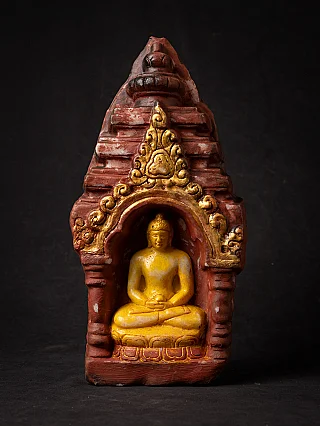
Most pieces are cast in bronze using techniques refined over seven centuries, though stone and stucco also appear in earlier temple sculpture. Together with our antique Buddha heads, these statues trace how Thailand's shifting capitals each left their own mark on Buddhist art.
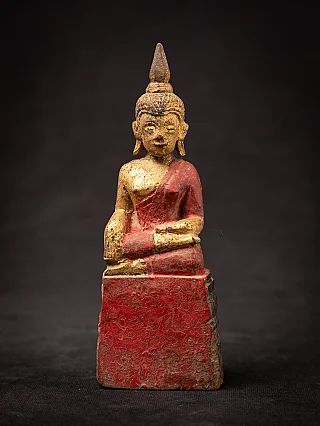
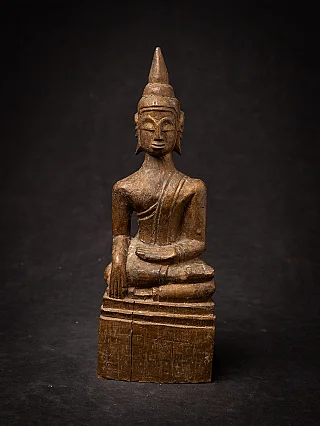
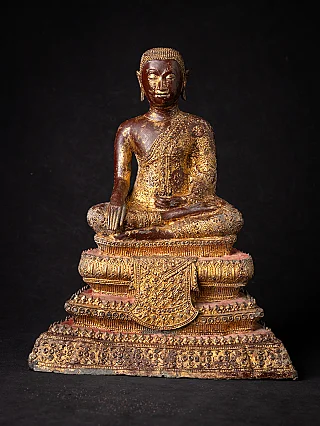
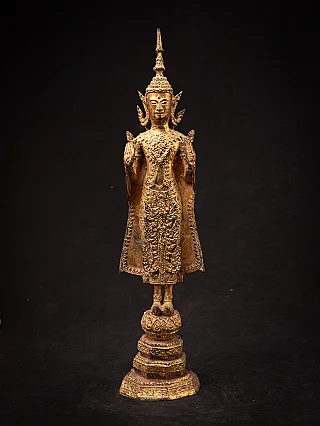
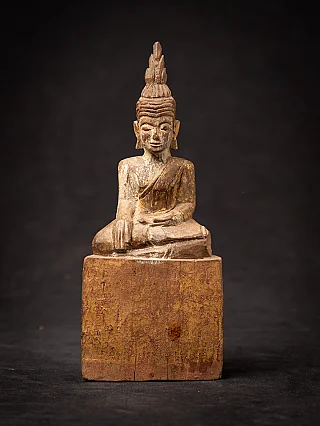
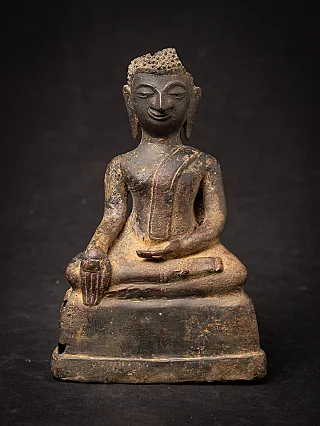
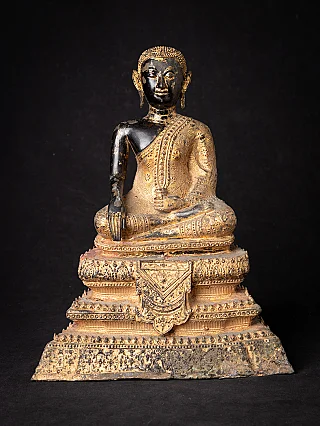
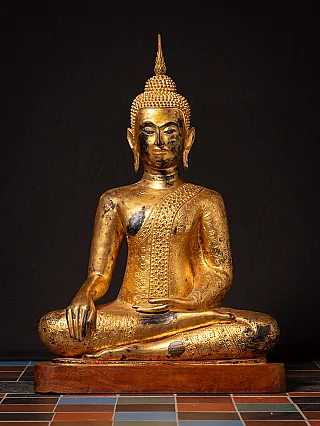
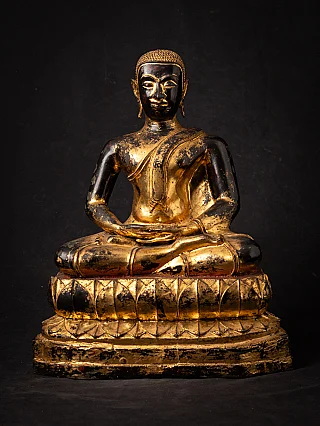
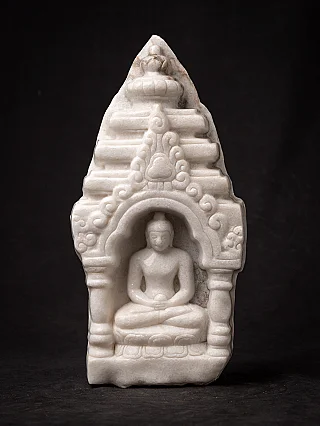
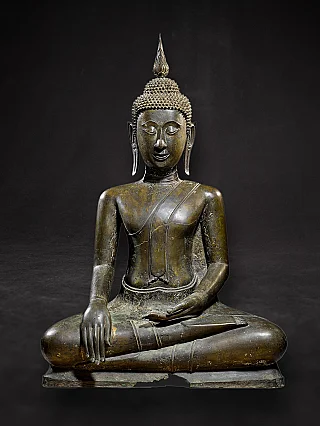
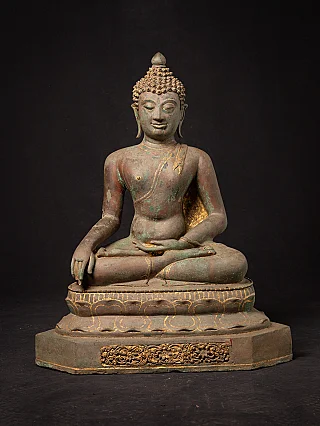
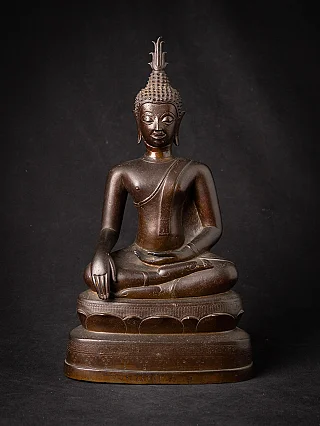
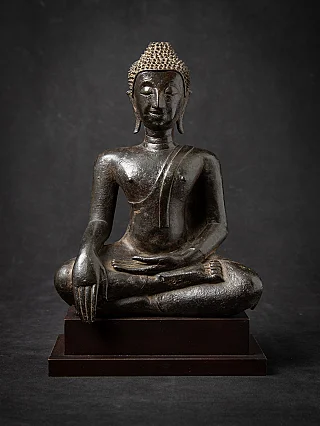
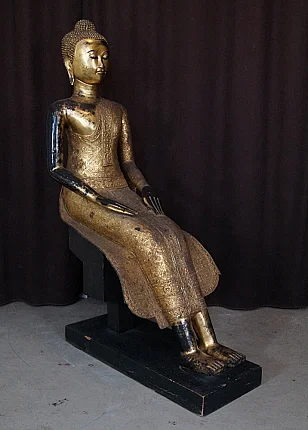
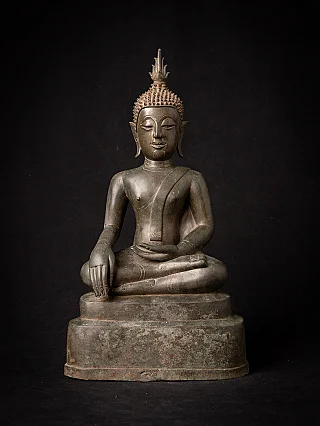
Thailand: A Living Tradition of Buddhist Art
Buddhism is thought to have reached the region that is now Thailand as early as the 3rd century BCE, but it was the Sukhothai kingdom, founded in 1238, that gave Thai Buddhist art its first truly distinctive identity. Under King Ramkhamhaeng, Sukhothai sculptors moved away from earlier Khmer and Mon conventions to create Buddha statues with flame-like ushnisha, gently curving limbs, and an expression of serene detachment that remains the benchmark of classical Thai style.
Sukhothai and the Invention of the Walking Buddha
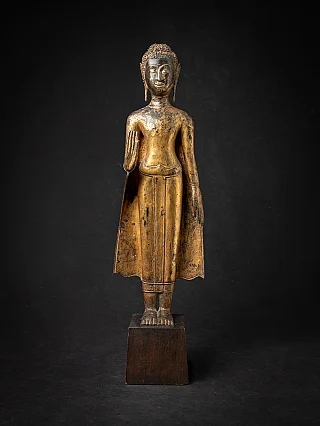
Sukhothai's most original contribution was the "walking Buddha," a fluid standing posture with one heel raised as if in mid-step, a pose found nowhere else in the Buddhist world. It was designed to express spiritual grace in motion rather than static meditation, and it remains one of the clearest ways to identify a genuine Sukhothai-influenced statue among later Thai works.
Ayutthaya: Royal Splendor and Crowned Buddhas
When the capital moved to Ayutthaya in 1351, Thai sculpture absorbed new Khmer and royal court influences, producing elaborately crowned Buddha statues adorned with jewelry to reflect the Buddha's status as a spiritual king. Ayutthaya remained the artistic and political capital for over four centuries, until the city was destroyed in 1767, making surviving bronzes from this period especially prized by collectors.
Rattanakosin: Bangkok's Golden Age of Buddhist Art
Following Ayutthaya's fall, the Chakri dynasty established Bangkok as the new capital in 1782, ushering in the Rattanakosin style, which consciously revived Sukhothai and Ayutthaya forms while adding heavier gilding and more elaborate ornamentation. Most antique Thai bronzes available today date from this later, more prolific period.
Chiang Saen and the Lanna Connection
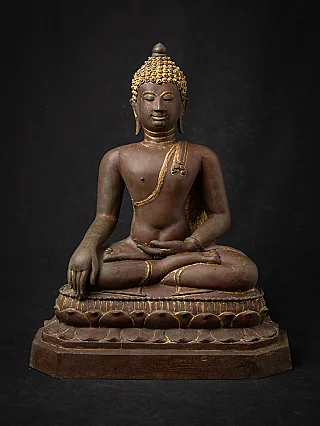
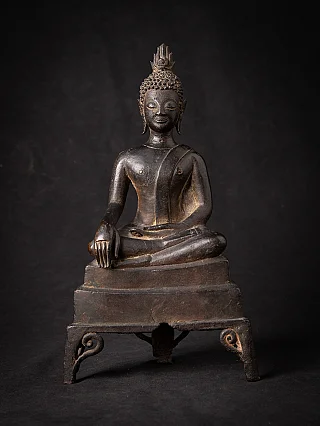
In the north, the independent Lanna kingdom developed the Chiang Saen style, marked by rounded faces and a stocky, muscular build closer to Indian Pala sculpture than to Sukhothai's elongated grace. Lanna's proximity to the Mekong region also shaped the art of neighboring Laos, giving the two traditions a shared visual vocabulary despite their political separation.
Mudras and Materials in Thai Buddhist Sculpture
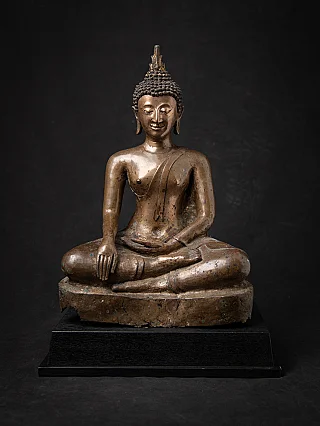
Bronze casting dominates Thai statuary, prized for the fine detail it allows in gestures such as the Bhumisparsha mudra, by far the most common in Thai art, alongside the Abhaya mudra associated with the walking posture and the Dharmachakra mudra representing the Buddha's first sermon. Larger temple statues were also placed within shrines and altars as focal points of daily worship.
Thai Art Compared with Its Neighbors
Thai Buddhist art absorbed early influence from Cambodia to the east and shares stylistic threads with Myanmar to the west, yet its progression through Sukhothai, Ayutthaya, and Rattanakosin gave it a continuity of style rarely matched elsewhere in Southeast Asia, one still visible in temples and collections today.
Frequently Asked Questions
Are these Thailand Buddha statues genuinely antique?
Yes. Every piece in our Thailand collection is an original antique, personally inspected and authenticated for age, material, and craftsmanship before it is listed. We do not sell modern reproductions.
What is the "walking Buddha" posture?
It is a standing posture unique to Sukhothai-era Thai art, showing the Buddha mid-step with one heel raised, symbolizing spiritual grace and movement rather than stillness.
What materials are Thailand Buddha statues made from?
Most Thai statues are cast in bronze, though earlier temple sculpture also used stone and stucco, often finished with gold leaf or lacquer.
How can I tell which Thai period a statue is from?
Sukhothai statues have elongated limbs and flame-like ushnisha, Ayutthaya statues are often crowned and bejeweled, and Rattanakosin statues tend to be more heavily gilded and ornamented, reviving earlier styles.
How does Thai Buddhist art differ from Lao or Khmer art?
Thai statues, especially from Sukhothai, are more elongated and idealized, while Lao figures are more linear and Khmer stone carving favors heavier, more monumental forms tied to temple architecture.
Do you ship Thailand Buddha statues internationally?
Yes, we ship worldwide. Each antique is carefully packed, and we handle the export documentation required for shipping cultural items abroad.